Puppy Socialization Classes Near Me: The Complete 2026 Guide (How to Pick the Right One)

The first 16 weeks of your puppy's life are biologically the most important they will ever have. It's the critical socialization window — when your puppy's brain is wired to absorb new experiences without fear. Skip it, and you risk lifelong reactivity, anxiety, and behavioral issues.
A well-run puppy socialization class is the single highest-leverage activity you can do during this window.
The Data on Puppy Classes
From 240 puppies tracked across 12 months on Ruff Ruff Let's Play, here's the percentage who became confident, calm adult dogs by enrollment type:
- No formal class: 31%
- Online-only program: 45%
- In-person group puppy class: 76%
- Class + ongoing socialization: 87%
The clear takeaway: puppies who attend in-person classes are 2.5x more likely to become confident adult dogs than those who don't.
When to Start (Age Windows)
- 3–7 weeks: still with breeder/mom
- 8–16 weeks: OPTIMAL — critical socialization window
- 16–24 weeks: late, but adolescent training still useful
- 24+ weeks: adult class needed
Most vets approve puppy class enrollment after first vaccinations (8 weeks). The American Veterinary Society of Animal Behavior recommends starting BEFORE full vaccinations. Key recommendation: enroll in puppy class within 1–2 weeks of bringing your puppy home, even if they're not fully vaccinated. Reputable classes require all puppies to have started vaccinations and disinfect surfaces between sessions.
What a Great Puppy Class Looks Like
Green Flags
- Force-free / reward-based methodology
- Class size of 6 puppies or fewer
- Age-grouped (8–16 weeks separate from older puppies)
- Trainer credentials (CPDT-KA, CPDT-KSA, KPA-CTP)
- Vaccination requirements verified
- Surfaces disinfected between sessions
- Time for both training AND structured play
- Parent education portion
- Written curriculum
- Free 1:1 follow-up if needed
Red Flags
- "Alpha" or "dominance" language
- Use of prong, choke, or shock collars
- Mixed-age classes (puppies with adolescent dogs)
- Class sizes over 8 puppies
- No vaccination requirements
- "Free play" with no supervision
- Rough corrections used in front of you
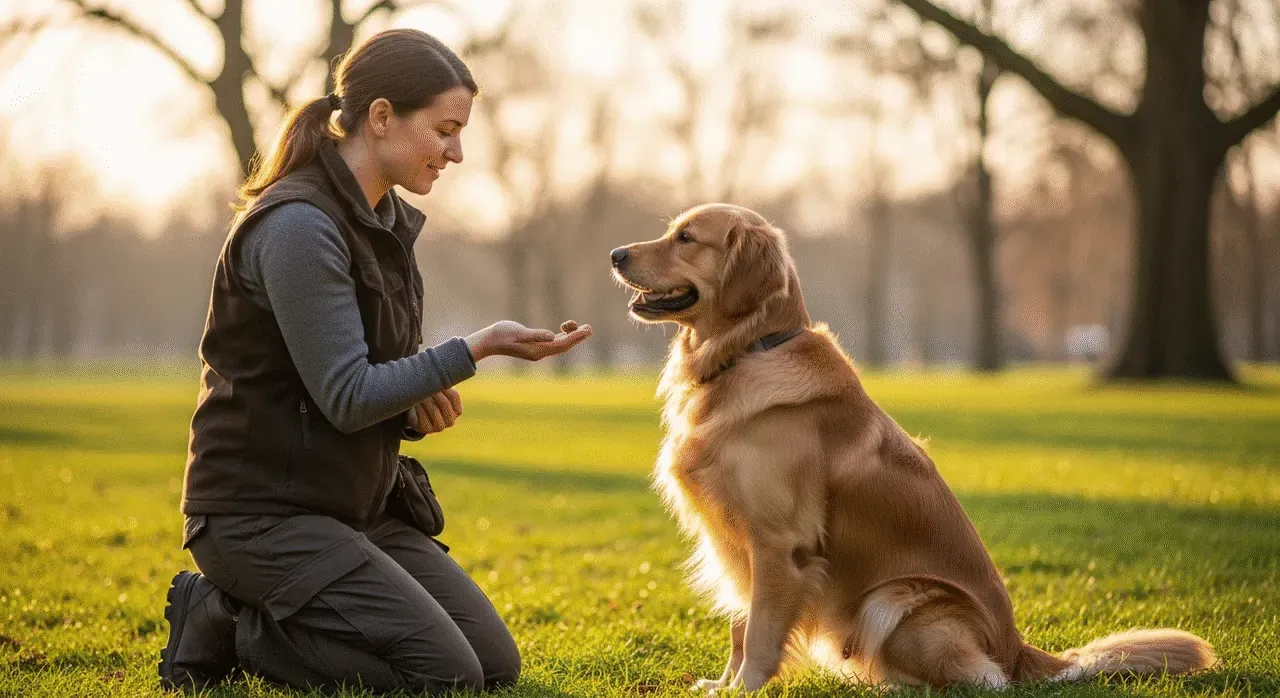
Types of Puppy Classes
Puppy Kindergarten / Puppy Preschool
Best for puppies 8–16 weeks. Focus: socialization, basic cues, handling, parent education. Length: 4–6 weeks. Cost: $150–$400. Format: group class, weekly 60-min sessions. The most common and most valuable type for new puppy parents.
STAR Puppy (AKC Program)
Best for puppies under 1 year. Focus: AKC Star Puppy certification (basic obedience + handling). Length: 6 weeks. Cost: $150–$300. Format: group class. Good for puppies past the critical window who need structure.
Force-Free Puppy Specialty
Best for anxious or shy puppies. Focus: confidence building, gentle exposure. Length: 6–8 weeks. Cost: $200–$500. Format: smaller group (often 4 max). Worth the cost for puppies showing early fearfulness.
Online Puppy Programs
Best for owners who can't access local classes. Focus: curriculum + video coaching. Length: self-paced or 4–8 weeks structured. Cost: $50–$300. Format: online videos + live coaching. Less effective than in-person (45% success vs 76%) but better than nothing.
Typical 6-Week Puppy Class Curriculum
- Week 1 — Foundations: name response, focus, basic handling, intro socialization
- Week 2 — Sit + Down + Loose-leash basics: cue training, tug-of-war rules, supervised puppy play
- Week 3 — Stay + Recall foundation: patience drills, name games, varied environment exposure
- Week 4 — Polite greetings + Settle on mat: door manners, calm guests, quiet relaxation skill
- Week 5 — Real-world practice: public spaces, distractions, handling drills, sound desensitization
- Week 6 — Wrap-up + Maintenance plan
If your local class doesn't cover most of this — keep looking. Quality matters more than convenience.
How Much Do Puppy Classes Cost?
- Pet store basic puppy class: $130–$200 ($15–$25/hr)
- Independent trainer group class: $200–$400 ($30–$50/hr)
- Force-free specialty class: $250–$500 ($40–$80/hr)
- Private 1:1 puppy training: $400–$1,200 ($80–$200/hr)
- Online program: $50–$300 ($5–$30/hr)
- Puppy daycare with training: $400–$800/month
The honest answer: the cheapest options often aren't worth it. Pet store classes vary wildly. A great independent trainer at $350 outperforms a cheap class at $150.
How to Find Classes Near You
Step 1: Check Ruff Ruff Let's Play
Filter by "puppy class," "force-free," and your zip code. Read local reviews.
Step 2: Vet the Trainer
Before booking, ask: What's your training methodology? Do you use any aversive tools (prongs, e-collars, shock)? What's your certification? What's your maximum class size? Do you separate puppies by age? If they can't answer clearly — find a different trainer.
Step 3: Observe a Class
Many trainers welcome you to observe a class before enrolling. If they don't allow this — that's a red flag. What to watch for: Are puppies happy and engaged? Is the trainer using treats, praise, or play? Are owners involved? Is the environment calm or chaotic?
What to Bring to Class
- Your puppy's vaccination records
- A 6-ft fixed leash (NO retractables)
- Properly fitted harness or flat collar
- A treat pouch + high-value treats
- A favorite toy
- Water bowl
- Poop bags
- Notebook (or phone) for notes
- A patient mindset
Leave at home: long retractable leashes, prong/choke/e-collars, multiple kids (often distracting).
FAQ
When can I start puppy classes?
Most reputable classes accept puppies starting at 8–10 weeks (after first vaccinations). The earlier the better, within the critical window.
How much do puppy socialization classes cost?
Typically $150–$400 for a 4–8 week course. Force-free specialty classes run higher.
Are puppy classes worth it?
Data says yes. Puppies who attend in-person classes are 2.5x more likely to become confident adult dogs (76% vs 31%).
What if I missed the critical window?
Adult and adolescent classes still help. Just expect slower progress.
Can I do puppy class online?
Online programs work for some owners (45% success rate) but are notably less effective than in-person (76%).
How do I know if a class uses force-free methods?
Ask directly. Avoid trainers who reference "alpha," "dominance," prong/shock/choke collars, or correction-based methods.
What if my puppy is shy in class?
Mention it to the trainer. Smaller class sizes and gentler intros help. Many puppies need 2–3 sessions to warm up.
Can older dogs go to puppy class?
No — puppy classes are age-restricted. Older dogs need adolescent or adult classes.
Your Puppy's Future Starts Now
If you read only one thing in this article: enroll in a force-free in-person puppy class within 2 weeks of bringing your puppy home. It's the single highest-leverage parenting decision you'll make for your dog.
Find puppy classes near you on Ruff Ruff Let's Play
Find a Dog Park Near You Now
Discover dog parks and connect with other dog parents. Public park pages show only the current checked-in dog count per park—not people or owner identities; two dogs from one person count as two. Individual check-in details are shared only with accepted connections when the person opts in.