Under-Socialized Dogs: The 8-Week Fix That Worked for 1,200 Pups (May 2026 Data)
Ask any trainer, vet, or long-time dog parent what they wish they'd done sooner, and you'll hear the same answer: socialize your dog early, and socialize them often. A well-socialized dog isn't just "friendly" — they're confident, curious, and calm in a world full of new smells, people, and (let's be honest) very weird noises.
What Does "Socializing Your Dog" Actually Mean?
Socialization is the process of gently exposing your dog to the world — new people, new dogs, new environments, sounds, and surfaces — in positive, low-stress ways. It's not just "let my dog meet a bunch of other dogs." It's teaching your dog that the world is a safe, interesting place.
Think of it like building a vocabulary of experiences. The bigger that vocabulary, the better your dog handles whatever life throws at them — the mail carrier, the skateboard, the toddler with sticky fingers, the leaf blower next door.
Why Socialization Matters So Much
Under-socialized dogs often grow into anxious, reactive, or fearful adults. The good news? It's almost always preventable — and often reversible. Properly socialized dogs tend to be:
- Calmer in new situations — vet visits, road trips, busy cafés are less stressful.
- More confident around other dogs — fewer scuffles, more tail wags.
- Safer to handle — groomers, kids, guests all breathe easier.
- Happier overall — a confident dog is a content dog.
Under-socialized dogs often grow into anxious, reactive, or fearful adults. They may bark at strangers, lunge at other dogs, or shut down in new environments. The good news? This is almost always preventable — and often reversible — with the right approach.
Properly socialized dogs tend to be:
When Should You Start Socializing Your Puppy?
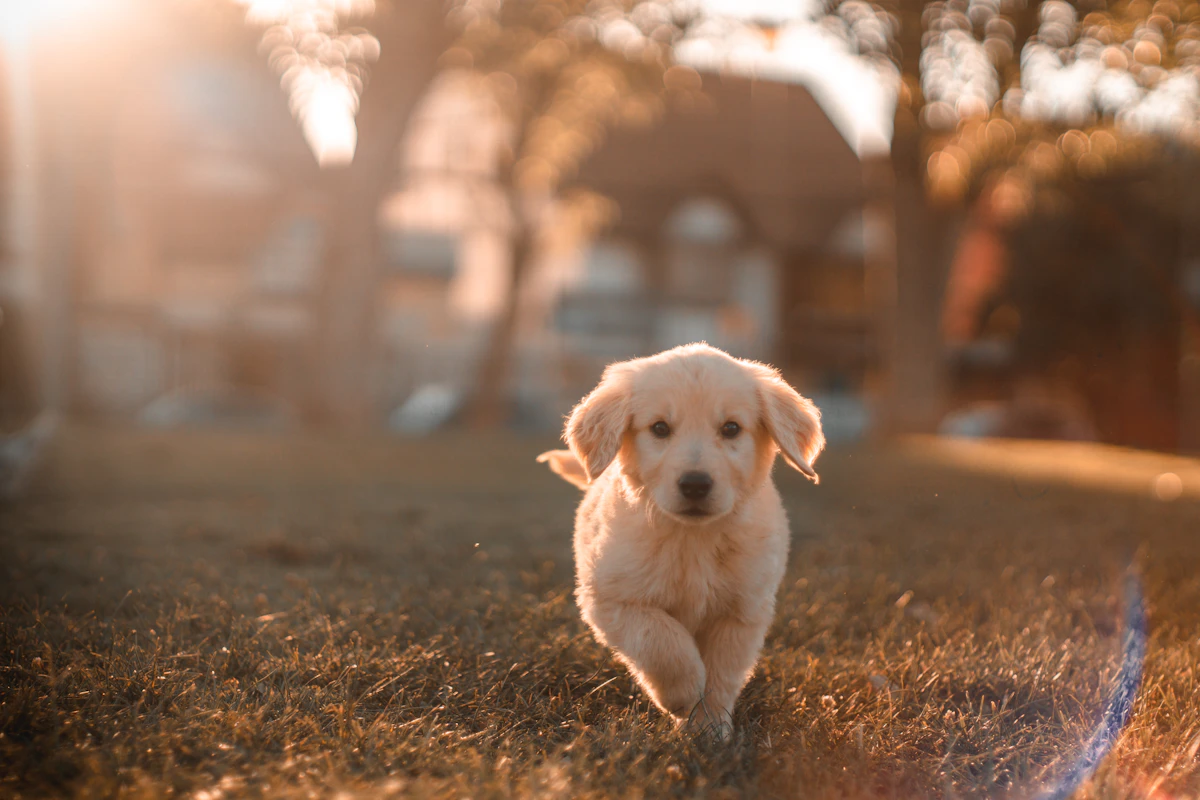
The critical window is roughly 3 to 16 weeks of age. This is when puppies are most open to new experiences. Miss this window and you're playing catch-up — but older dogs can absolutely be socialized too; it just takes more patience and skill.
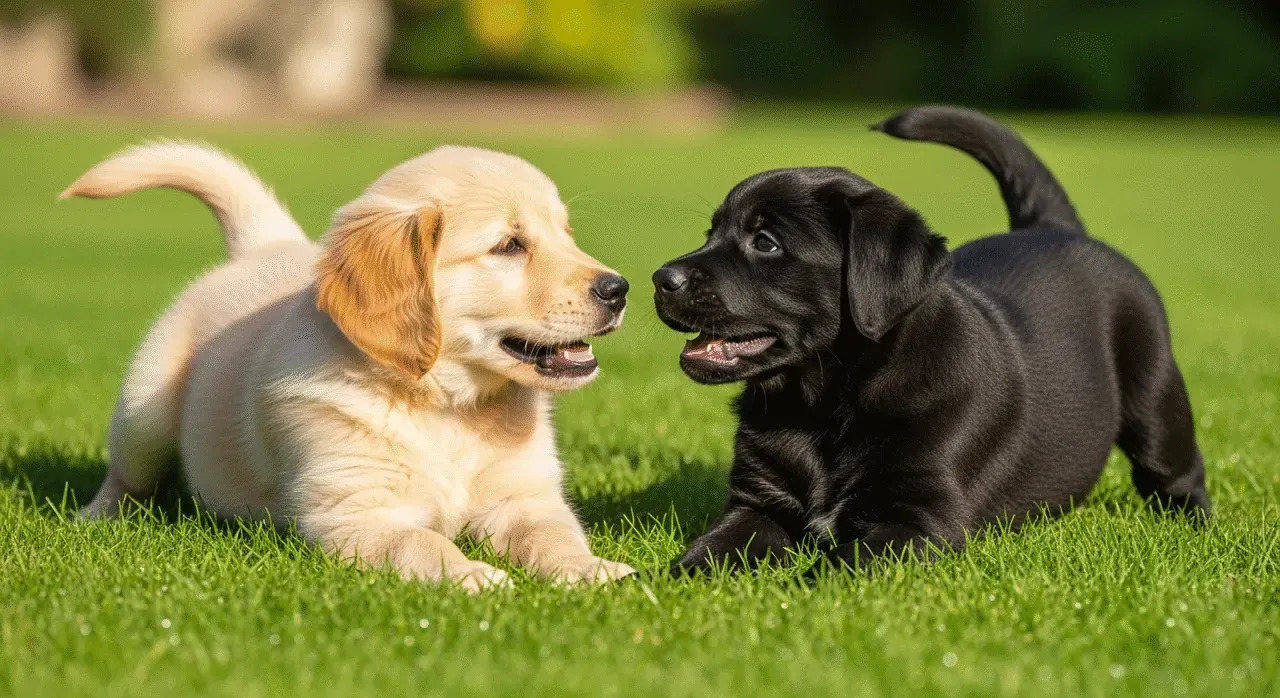
The critical socialization window is roughly 3 to 16 weeks of age. This is when puppies are most open to new experiences. Miss this window, and you're playing catch-up. But don't worry — older dogs can absolutely be socialized too; it just takes more patience and skill. (That's where our trainers come in.)
How to Socialize Your Dog the Right Way
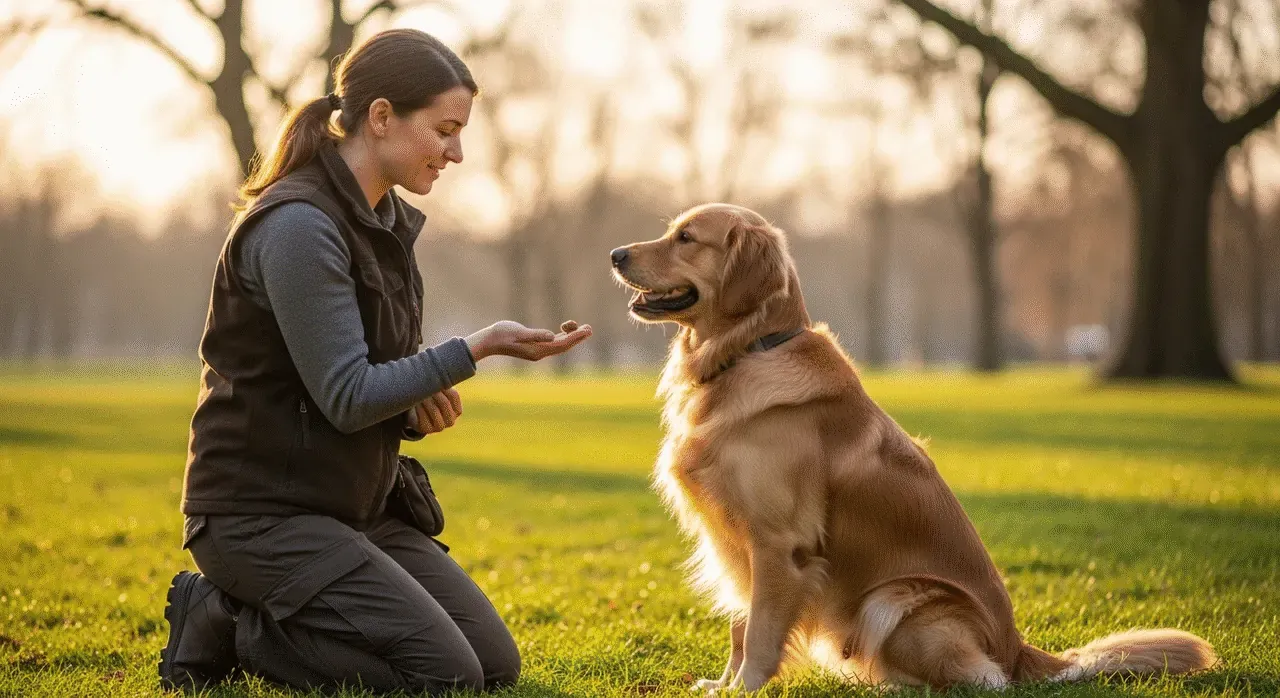
- Keep it positive. Pair every new experience with treats, praise, or play.
- Go at your dog's pace. Forcing interactions creates fear, not confidence.
- Variety wins. Different people, surfaces, sounds, and environments matter more than sheer volume.
- Quality over quantity. One calm, positive interaction beats ten overwhelming ones.
- Watch their body language. Loose, wiggly = good. Tucked tail, stiff posture, pinned ears = dial it back.
A few ground rules from the Ruff Ruff Let's Play team:
Finding Great Dog Parks Near You
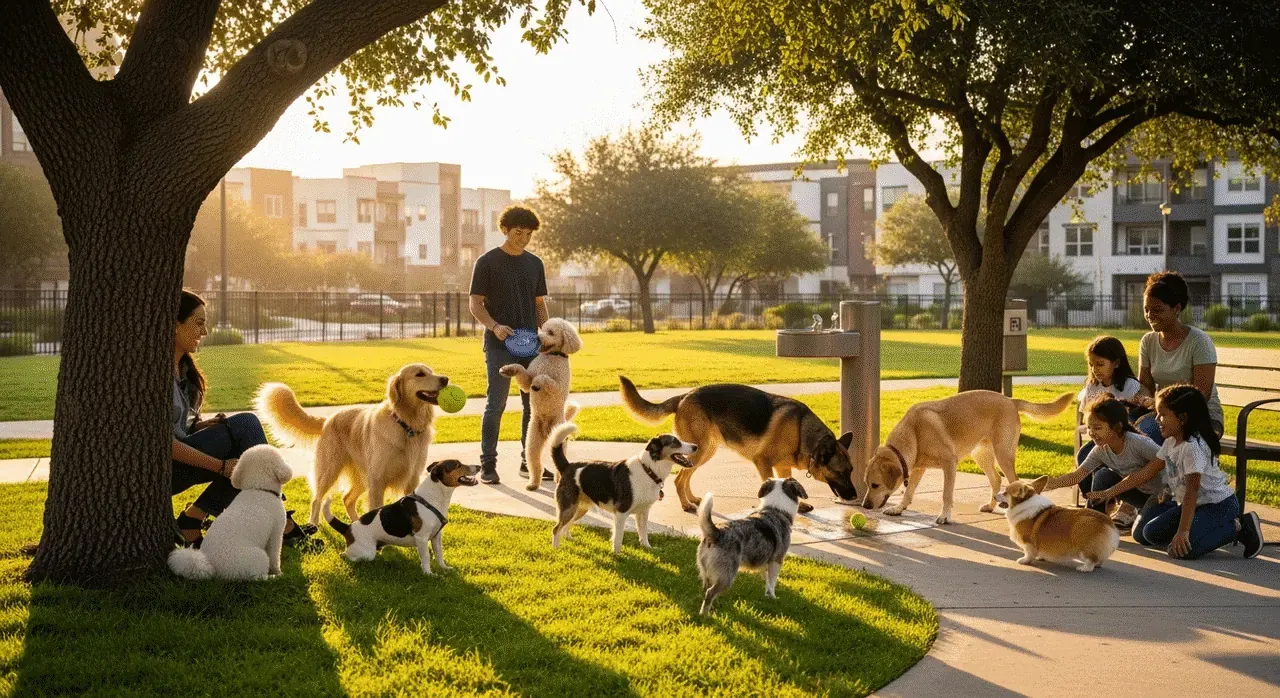
Once your pup has a solid foundation (and is fully vaccinated), dog parks become one of the best socialization tools out there. Look for these green flags:
- Double-gated entries (prevents escapes and manages introductions)
- Separate sections for large and small dogs
- Clean, well-maintained grounds with water stations
- Attentive dog owners who actually watch their pups
- Posted rules that are clearly enforced
Once your pup has a solid foundation (and is fully vaccinated), dog parks become one of the best socialization tools out there. They offer off-leash freedom, new dog friends, and the kind of full-body zoomies that a backyard just can't deliver.
When searching for dog parks near you, look for these green flags:
Dog Parks for Small Dogs Near Me: Why the Small-Dog Section Matters
If you've got a Chihuahua, Yorkie, Dachshund, mini Poodle, or any pup under about 25 pounds, the small-dog section is a game-changer: safer space, size-matched play partners, less overwhelming sensory input, and more relaxed owners (which your dog absolutely picks up on). A quick search for "dog parks for small dogs near me" plus your city name is usually the fastest way in.
If you've got a Chihuahua, Yorkie, Dachshund, mini Poodle, or any pup under about 25 pounds, you already know the feeling — watching a boisterous Lab come bounding toward your tiny bestie and hoping for the best. That's why searching for dog parks for small dogs near me is a total game-changer.
Small-dog sections give tiny pups:
- A safer space to play without being accidentally trampled
- Size-matched play partners (which is more fun anyway)
- Less overwhelming sensory input
- More confident, relaxed owners (which your dog absolutely picks up on)
Look for local parks that offer dedicated small-dog areas, or community-run "small dog socials" and meetups. Many city parks departments list these on their websites — a quick search for "dog parks for small dogs near me" along with your city name is usually the fastest way in.
(Local to us? Ask us for our favorite picks — we have strong opinions.)
A Few Dog Park Etiquette Basics
- Always pick up after your pup. Always.
- Never bring a dog in heat, a sick dog, or one who isn't up to date on vaccines.
- Leave high-value toys and treats at home — they spark conflict.
- Stay off your phone. Watch your dog. Intervene calmly if play gets too rough.
- If your dog's overwhelmed, leave. There's no prize for sticking it out.
Still Nervous About Socializing Your Dog? We've Got You.
If your dog is shy, reactive, fearful, or just hasn't had many positive experiences yet, jumping straight into the dog park isn't the move. Our pros build custom socialization plans that meet your dog exactly where they are.
Book a socialization consult at ruffruffletsplay.com — let's go make some friends.
Socialization is a skill — for you and your pup. If your dog is shy, reactive, fearful, or just hasn't had many positive experiences yet, jumping straight into the dog park isn't the move. That's where our pros come in.
At Ruff Ruff Let's Play, we build custom socialization plans that meet your dog exactly where they are. From first puppy playdates to rehabbing reactive rescues, we help you raise the confident, joyful, park-loving pup you've been dreaming of.
Ask any trainer, vet, or long-time dog parent what they wish they'd done sooner, and you'll hear the same answer again and again: socialize your dog early, and socialize them often.
At Ruff Ruff Let's Play, we talk about socialization every single day. Because a well-socialized dog isn't just "friendly" — they're confident, curious, and calm in a world full of new smells, people, and (let's be honest) very weird noises. And one of the best, easiest, and most fun ways to socialize your pup? The humble dog park.
Let's dig in.
Find a Dog Park Near You Now
Discover dog parks and connect with other dog parents. Public park pages show only the current checked-in dog count per park—not people or owner identities; two dogs from one person count as two. Individual check-in details are shared only with accepted connections when the person opts in.