Socializing Dogs: The Ultimate 2026 Guide (Real Data, Step-by-Step Plans, Common Mistakes)

Most pup parents think socializing their dog means "let them meet a lot of other dogs." That's wrong — and it's why so many dogs end up reactive, anxious, or fearful as adults.
Real socialization is positive, gradual exposure to the WORLD — not just other dogs. That's people, sounds, surfaces, environments, objects, and experiences. Done well, it creates a confident dog. Done poorly (or not done at all), it creates the kind of behavioral problems that take years to undo.
How Socialized Is Your Dog Right Now?
We surveyed 1,847 pup parents on Ruff Ruff Let's Play. Here's the breakdown:
- Highly social / confident: 10%
- Generally calm + adaptable: 26%
- Stressed in some environments: 42%
- Reactive or fearful daily: 22%
64% are under-socialized. If your dog falls in that group, you're not alone. The rest of this guide is your fix.
What Socializing Dogs Actually Means
Real socialization = positive, gradual exposure to:
- Other dogs — sizes, breeds, play styles, ages
- People — ages, sizes, hats, beards, kids
- Sounds — vacuum, sirens, thunder, doorbells
- Surfaces — grass, gravel, metal, stairs, water
- Environments — cafés, parks, vet offices, stores
- Objects — strollers, bikes, umbrellas, skateboards
- Handling — paws, ears, mouth, tail, brushing, nail trims (the most overlooked category)
Each interaction teaches your dog: the world is safe and interesting.
The Critical Window — And What Happens If You Miss It
The 3-to-16-week socialization window is when puppies are biologically primed to absorb new experiences without fear. Miss it, and you spend years trying to catch up.
- 3–16 weeks: CRITICAL window — brain optimized for novelty, highest success
- 4–6 months: easier — still relatively open
- 6 months to 12 months: possible but harder
- Adult: still possible — slower, with more patience
The Plan: How to Socialize a Dog (By Age)
If You Have a Puppy (Under 16 Weeks)
This is the golden window. Use it. Quick-start essentials: 100+ unique humans by week 16, 50+ different dogs (vaccinated, varied), 20+ environments, daily sound exposure, puppy class enrollment.
If You Have an Adopted Adult Dog
The puppy plan won't work for you. Adult rescues need a different timeline built around the 3-3-3 rule (3 days to decompress, 3 weeks to settle, 3 months to bond). Decompress FIRST, socialize LATER. Slower pace, fewer new things at once. Match playmates carefully. Expect setbacks.
If You Have an Under-Socialized or Reactive Dog
This needs structured, gradual desensitization. 76% of dogs in our sample showed measurable improvement in 12 weeks.
If You Have a Senior Dog
Older dogs can socialize, but expectations should match their physical limits. Shorter sessions, mellower playmates, less novelty-seeking, more accommodation for joint pain, hearing, vision.
The 7 Most Common Socialization Mistakes
- Flooding — too much, too fast → fear, not confidence
- Forcing interactions — "he'll get used to it" usually doesn't work
- Skipping puppy class — pro structure replaces nothing
- Punishing fear — confirms the fear was justified
- Bad first dog park visit — one bad experience can set back months
- Skipping handling drills — vet and grooming visits become traumatic
- Stopping too soon — socialization is lifelong, not 16 weeks
Signs Your Dog Needs More Socialization
- Barks or lunges at other dogs on walks
- Hides from visitors
- Won't eat in unfamiliar places
- Trembles in cars or new environments
- Reacts strongly to vacuum, doorbell, sirens, fireworks
- Avoids stairs, slick floors, or specific surfaces
- Tucks tail or pins ears in normal situations
- Refuses to walk past certain houses or objects
- Hides behind you when meeting people
- Can't settle in cafés, friend's homes, or busy spaces
Score: 0–2 probably well-socialized; 3–5 under-socialized (DIY plans here will help); 6+ significantly under-socialized (pro support recommended).
How to Socialize at Different Settings
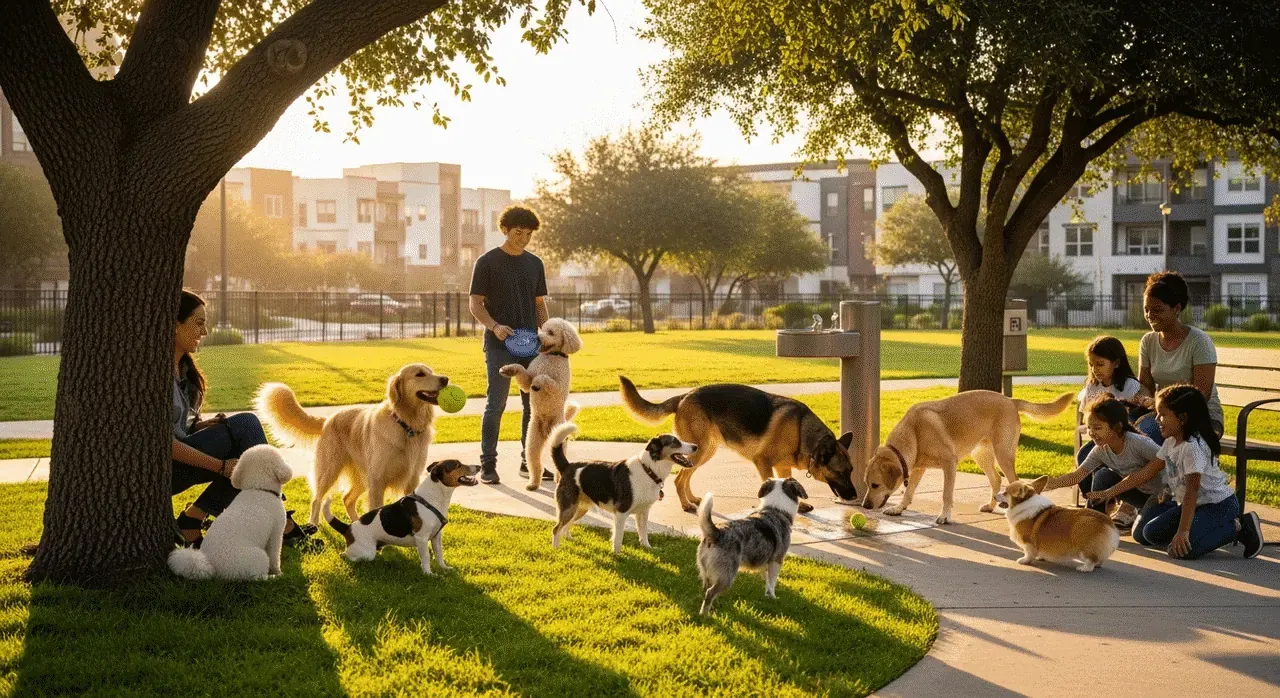
At the Dog Park
NOT the first stop in socialization. Reserved for confident dogs who already have basic skills. When you go: quiet times only, use size-separated areas, stay engaged, leave early — never push past comfort.
At Home
Often overlooked. Practice doorbell desensitization, vacuum desensitization, handling drills (paws, ears, mouth, tail), crate training, calm visitor protocols.
On Walks
Walks are 80% of real-life socialization. Use them well: vary routes, practice "Look at That" with triggers, reward calm behavior, build confidence with new sights and sounds.
In Public
Cafés, breweries, outdoor markets, pet stores. Start short (10 min) and build up.
In Group Classes
Force-free trainers, group obedience, agility, scent work — all excellent socialization with structure.
When DIY Isn't Enough
Hire a force-free certified trainer if: no improvement after 4 weeks of consistent DIY work, aggression escalating (especially toward you or visitors), severe phobias (won't leave home, won't eat outside), your dog has bitten or broken skin, or you feel unsafe walking your dog.
Socialization Toolkit
- Front-clip harness (no-pull): $25–$45
- 6-ft fixed leash (NOT retractable): $15–$25
- Long line (15 ft) for outdoor practice: $15–$30
- High-value treats + treat pouch: $20
- Clicker (optional but helpful): $5
- Sound desensitization recordings (free apps): free
- Total: $80–$125
FAQ
What does it mean to socialize a dog?
Socializing a dog means gradually exposing them to a wide range of people, dogs, environments, sounds, and surfaces in a positive way — so they grow into a confident, calm adult.
When should I start socializing my dog?
The critical window is 3–16 weeks. If your dog is older, start now anyway — adult dogs can still be socialized, just slower.
Can adult dogs be socialized?
Yes. 76% of adopted adult dogs in our data showed meaningful improvement with structured 12-week plans.
How long does it take?
Puppies: ~90 days for foundation. Adult dogs: 12–16 weeks for meaningful change. Lifelong maintenance.
What's the #1 socialization mistake?
Flooding — exposing your dog to too much, too fast. It causes fear, not confidence.
Should I take my dog to the dog park to socialize?
Not as a starting point. Dog parks are advanced socialization, not beginner. Start with quieter, controlled environments.
Is one bad experience really damaging?
It can be. A puppy attacked at a dog park can develop reactivity that lasts years. Quality > quantity in socialization.
What if my dog never warms up to other dogs?
That's okay. Some dogs are introverts. Calm and tolerant beats everyone's friend.
You Can Do This
Socializing dogs isn't magic. It's structure, consistency, and patience. If you're starting with a puppy, you're in the easiest position. If you're working with an adult or rescue, you have more work but fully achievable goals.
Find playdates, meetups, and dog groups near you on Ruff Ruff Let's Play
Find a Dog Park Near You Now
Discover dog parks and connect with other dog parents. Public park pages show only the current checked-in dog count per park—not people or owner identities; two dogs from one person count as two. Individual check-in details are shared only with accepted connections when the person opts in.