The Adopted Adult Dog Socialization Plan: Why Puppy Advice Doesn't Apply (Real Data + 12-Week Calendar)
You adopted an adult dog. You're scrolling for socialization advice. Every article you find is about puppies. Here's what those articles won't tell you: adult dog socialization is a different game. It needs a different plan, different timeline, and different expectations.
We pulled progress data from 156 adopted adult dogs across Ruff Ruff Let's Play. The result is the only adult-specific socialization plan you'll find online.
What the Data Says About Adult Dog Adoptions
- 17% settled in within days 1–3
- 38% showing personality by 1 week
- 71% in routine + comfort by 1 month
- 94% fully adjusted by 3 months
The 3-3-3 Rule
3 days = decompress. 3 weeks = settle. 3 months = bonded. Most adoptions fail because owners try to socialize during the first 3 weeks. Wait. Let your dog decompress. Socialization comes later.
The single most important number: 17% of adopted adult dogs settle in within 3 days. The other 83% need much longer. If you've had your dog for a week and they're still hiding, that's normal.
Why Puppy Plans Fail Adult Dogs
1. They've Already Had Experiences
Puppies are blank slates. Adult dogs come with histories — sometimes great, often unknown. A puppy plan assumes nothing has gone wrong yet. With an adult, you're often undoing damage as much as building skills.
2. They're Not in a Critical Window
The 3-to-16-week socialization window is closed. Adult dogs CAN learn — but slower, with more setbacks, and with more individual variation.
3. They Need Decompression First
Puppies arrive ready to absorb. Adult dogs need 2–3 weeks to even be themselves in your home. Forcing socialization too early is the #1 mistake.
Phase 1: Decompress (Weeks 1–3)
Goal: let your dog become themselves. This phase is the opposite of puppy socialization. You're NOT introducing them to lots of new things. You're letting their nervous system regulate.
Daily Routine
- Predictable feeding times (same time, same place)
- Quiet home environment
- 2–3 short, gentle leashed walks (15–20 min)
- One safe, dedicated rest space (crate, bed, room)
- Minimal visitors
Avoid
- Big family gatherings
- Dog park visits
- Loud parties
- Multi-day road trips
- Pressure to "make friends"
Signs They're Ready for Phase 2
- Eating consistently
- Sleeping deeply
- Tail relaxed at neutral
- Initiating affection on their own
- Walking calmly on leash on familiar routes
For most dogs, this is 2–3 weeks. For some (especially shutdowns), 6–8 weeks.
Phase 2: Stabilize (Weeks 4–6)
Goal: build a confident foundation in low-stakes situations. Now you start adding controlled new exposures: one new environment per week (calm coffee shop, quiet trail, friend's home), meet 1–2 new humans per week (calm, dog-savvy people), practice basic commands in new environments, reinforce solid recall on long leash. Still avoiding crowded dog parks, big group walks, and stranger-dog free-for-alls.
Phase 3: Socialize (Weeks 7–9)
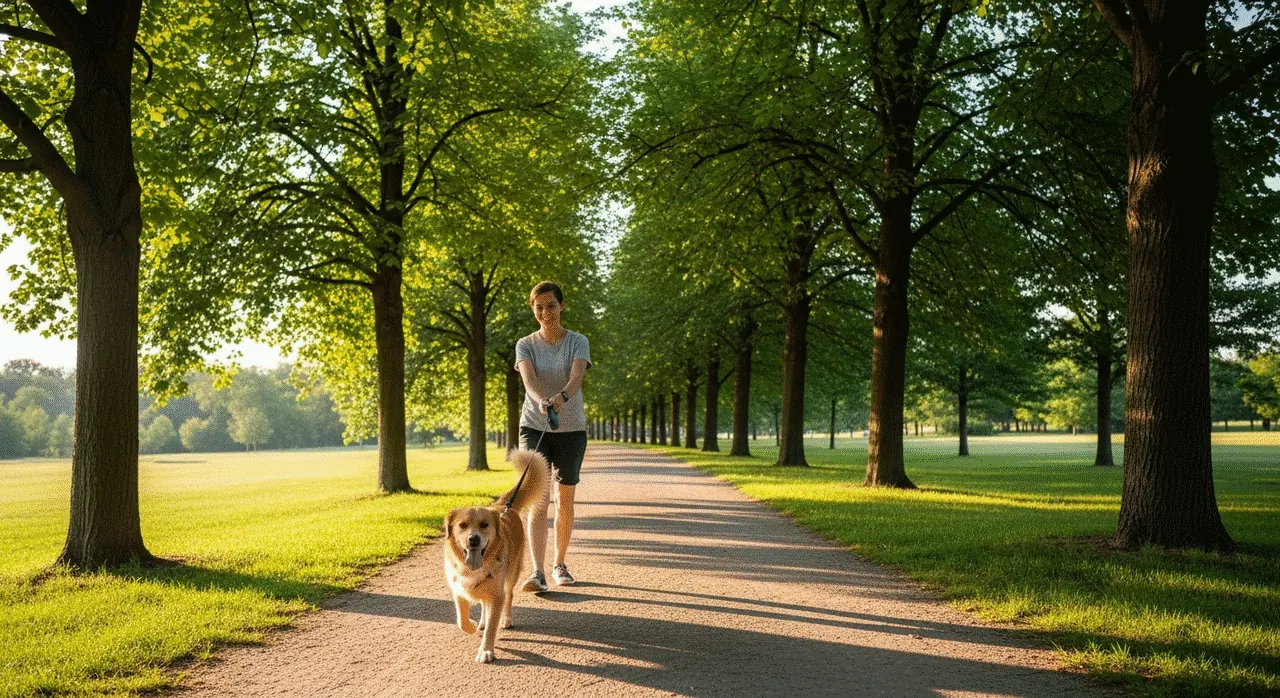
Goal: carefully introduce your dog to other dogs. Remember: your dog isn't a puppy. They likely have preferences, history, and dealbreakers. Your job is to discover them — not impose them.
The Approach
- Start with ONE compatible dog. A friend's calm, neutral dog. Not a chaotic dog park.
- Meet on neutral ground. Walk parallel, not face-to-face. 30+ minutes of side-by-side walking before letting them greet.
- End on a high note. First sessions are 20–30 minutes max.
- Reward calm. Treat your dog every time they choose calm over reactive.
- Pay attention to body language. Tucked tail, pinned ears, hard stares = STOP.
The First-Meet Protocol
- Both leashed, neutral ground
- Parallel walk, 15–30 min
- Brief sniff, 3 seconds
- Walk apart, reset
- If both relaxed, re-greet
If at any point you see stiff body, hard stare, or tucked tail — back off immediately.
Phase 4: Refine (Weeks 10–12)
Goal: build sustainable confidence. By week 10, your dog has a trusted home, a few canine friends, basic confidence in new environments, and predictable routines. Now you generalize: small group meetups (3–4 dogs, all known), off-peak dog park visits with full caution, travel within reason, new environments weekly. You're NOT trying to make your dog love every dog they meet. You're building a confident dog who can handle the world calmly.
Special Cases
Shutdown Dogs
If your dog hasn't moved past Phase 1 by week 4 — meaning they're still hiding, refusing food, or freezing — they're shut down. Don't escalate exposure. Work with a force-free trainer. Consider veterinary support (anti-anxiety meds may be appropriate). Be patient — shutdowns sometimes take 6–12 months to fully resolve.
Reactive Adult Dogs
If your dog shows reactivity (barking/lunging at triggers), follow our 12-week reactive dog recovery plan.
Senior Adoptions
Older dogs (8+) often skip much of the "anxiety" phase but may need MORE accommodation for physical limits. Adjust pace down, expect less novelty seeking.
Dogs with Trauma History
Visible signs (cowering, fear of specific objects, body sensitivity) suggest trauma. Adjust to a 6-month timeline, not 12 weeks. Work with a pro.
Warning Signs to Get Pro Help
- Aggressive growling, snapping, or biting
- Refusing food past day 5
- No improvement by week 6
- Severe sound or motion phobias
- Resource guarding people or food
- Marked deterioration after week 3
Your 4-Week Mindset Shift
- "Expose them to everything" → "Let them decompress first"
- "Build socialization fast" → "Build trust first, social later"
- "Lots of dog friends!" → "A few good dog friends"
- "Visit lots of places" → "Master a few places, then expand"
- "Energy + enthusiasm" → "Calm + patience"
Your dog isn't broken. They're a refugee in a new country with new humans. Treat them like one.
FAQ
When should I start socializing my newly adopted adult dog?
Wait at least 2–3 weeks. Decompression comes first. Socialization too early often backfires.
Can adult dogs really learn to be social?
Yes — 94% of adopted adult dogs in our data showed meaningful adjustment within 3 months. Confidence is buildable at any age.
What's the 3-3-3 rule?
The widely-cited adoption rule: 3 days to decompress, 3 weeks to settle into routine, 3 months to feel fully bonded.
Should I take my new rescue to the dog park?
Not within the first 6–8 weeks. Use private rentals, matched playdates, and quiet meetups instead.
How do I know if my adopted dog is shut down?
Frozen body language, refusal to eat, no exploration, no engagement — for more than 2 weeks suggests shutdown. Consult a pro.
Can senior dogs be socialized?
Yes — but with different expectations. Less novelty-seeking, more accommodation for physical limits.
What's the biggest mistake new adopters make?
Rushing socialization. Most behavior issues we see in adopted dogs trace back to too much exposure too early.
You're Doing Better Than You Think
Adopting an adult dog is hard. The internet makes you feel like you're failing because everything's geared toward puppies. You're not failing. You're rebuilding a life. That takes time.
Find adult-dog-savvy trainers near you on Ruff Ruff Let's Play
Find a Dog Park Near You Now
Discover dog parks and connect with other dog parents. Public park pages show only the current checked-in dog count per park—not people or owner identities; two dogs from one person count as two. Individual check-in details are shared only with accepted connections when the person opts in.