Why Your Husky Looks Like They're Fighting (Spoiler: They're Just Vibing)
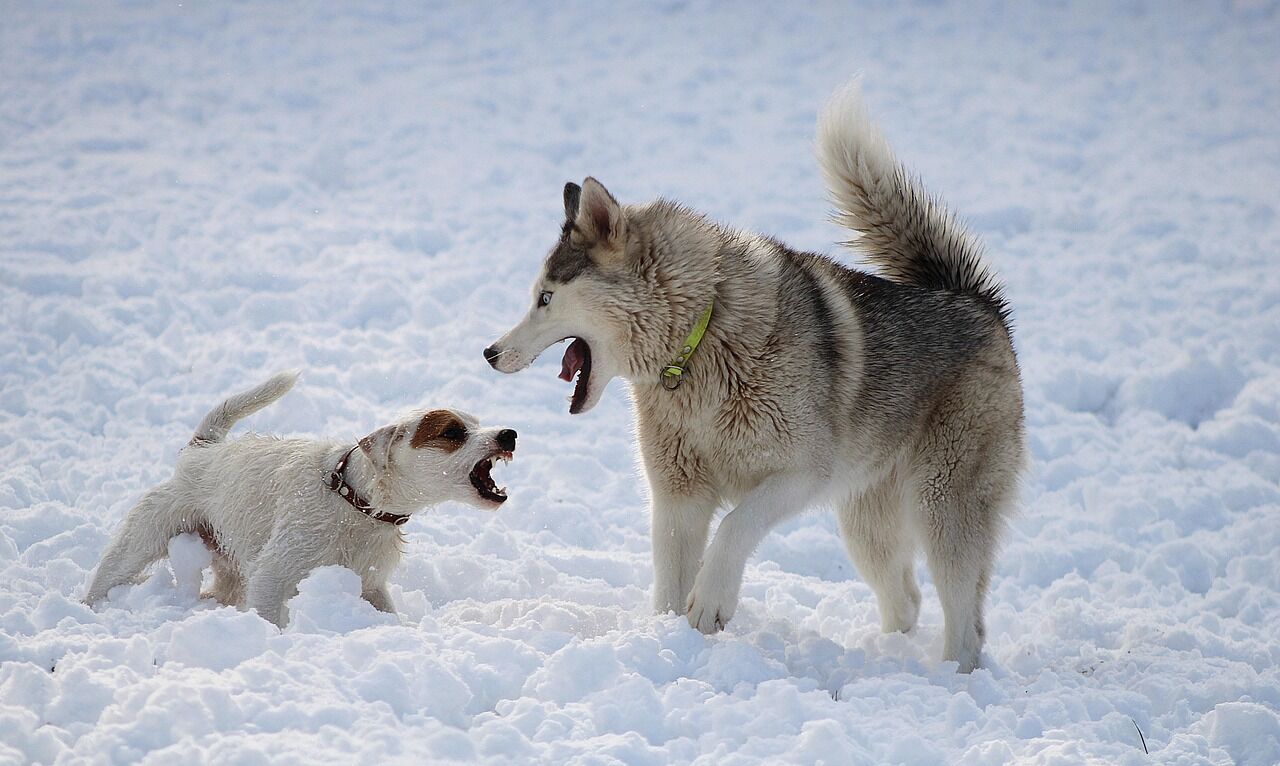
WAS THAT A SCREAM?!
If you've never lived with a Husky, the first time one plays in front of you is alarming.
They scream. They roar. They flop on the ground and writhe. They sound like a mountain lion mating with a ghost. Then they pop up tail wagging, ready to do it again.
Husky play is the most theatrical, vocal, and dramatic play in the dog world — and it almost always gets misread as aggression by people unfamiliar with the breed. This is what's actually happening.
A Brief Husky Vocabulary Lesson
- 'AROOOOO' — standard hello / I'm here / pay attention to me
- 'WOOWOOWOO' — I'm so happy I might explode
- High-pitched scream — I'm having the BEST time of my life
- Theatrical groaning — you asked me to do something I don't want to do
- 'BABABABA' mumbling — I am pleased and would like to continue this state
- Singing along to alarms — my ancestors howled at the moon, I howl at sirens
- Talking back when scolded — I have notes on your management style
- Banshee scream + flopping — bath time / I am being murdered (I am not)
If you have a Husky, you've heard ALL of these. If you haven't lived with one, you've been wondering 'is that dog okay?' for years.
What Real Husky Play Looks Like
Picture this scene at the dog park: two Huskies meet. They lock eyes. One makes a noise that sounds like a small child being abducted. The other one screams back. They lunge at each other, full-body roll on the ground, scream-laughing the whole time, body-slamming, taking turns being on top.
Twenty minutes later, they're both panting happily. Tails relaxed. Tongues out. That's healthy. They had the time of their lives. They'll do it again Saturday.
What's Going On Mechanically
Huskies were bred for endurance + sociability with their pack — pulling sleds for hours, working in tight teams, communicating constantly. Their play reflects this:
- Endurance running — Huskies can play HARD for 30+ minutes without breaking stride. Most other dogs tap out at 10–15.
- Constant vocalization — sled teams 'talk' to each other while working. Modern Huskies talk while playing.
- Full-body wrestling — sled work conditions them to physical contact. Body-checking, hip-bumping, and full rolls are normal.
- Dramatic expression — floppy bodies, mouth wide open, exaggerated movements. They commit to the bit.
- No herding instinct — unlike Border Collies, Huskies don't stalk. They're direct: I see you, we run, we wrestle.
Husky Play vs. Aggression — The Real Difference
PLAY = these are all together: loose, floppy, wiggly bodies; open, soft mouths (smiling); role reversal (taking turns on top/bottom); voluntary breaks + reset.
AGGRESSION = these replace above: stiff, frozen body; hard fixed stare with closed mouth; no breaks; one dog clearly trying to escape.
A loud, dramatic, screaming Husky play session with all the green flags = healthy. The same loud session with stiffness and no breaks = stop it.
What Other Pup Parents See vs. Reality
A non-Husky owner watching: 'Are those two dogs trying to kill each other?' A Husky owner watching: 'Wow, they're really vibing today.' Both are looking at the same thing.
The fix: gently educate. 'They're Huskies — this is what their play sounds like. Look, see the play bows? They're having a great time.' Most people are receptive. Some aren't. Don't waste energy on the unconvincable.
Best Park Strategies for Husky Parents
1. Match the Crowd
Huskies play best with other Huskies (the screaming becomes a chorus), other Northern breeds (Malamutes, Samoyeds), high-energy mixes (Lab/Pit/Shepherd mixes), and confident large dogs.
Less compatible with easily-spooked dogs (intensity overwhelms), small dogs (size mismatch real), senior dogs (energy mismatch), or reactive dogs (your Husky's noise will trigger).
2. Watch for 'Predatory Drift'
Huskies have prey drive. In high-arousal play with very small dogs, that drive can flip on. Be watchful.
3. Pick Big Parks
Huskies need SPACE. Cramped parks = frustrated Husky.
4. Let Them Sing
Trying to suppress your Husky's vocalizing is futile and unkind. They're not being naughty. They're being themselves.
5. Have a Bombproof Recall
Huskies are escape artists. A solid recall is non-negotiable in any off-leash environment.
Where Huskies Actually Thrive
The dog park is fine. But Huskies often shine elsewhere:
- Long off-leash hikes (matched recall required)
- Skijoring / canicross (yes, really)
- Snow play (their happy place)
- Pulling activities (cart, sled, weight-pull)
- Husky meetups — a pack of Huskies playing together is unforgettable
- Mountain or trail communities
FAQ
Why does my Husky scream when playing?
It's vocal play — completely normal for the breed. They're communicating excitement, not pain or aggression.
Are Huskies aggressive?
Almost never to humans or other dogs in healthy play. The intensity gets misread, but it's not aggression.
Can my Husky play with small dogs?
Sometimes. Watch carefully — the size mismatch is real, and Husky prey drive can flip on suddenly.
How can I tell if my Husky is overstimulated?
Frantic energy that stops responding to you, hard fixation on one dog, can't take breaks. End the visit.
My Husky won't shut up. Is that normal?
Yes. Huskies are the talkiest dog breed. You can train down the volume of barking, but eliminating Husky vocalization isn't realistic — or kind.
Do Huskies belong at dog parks?
Sometimes yes, often better elsewhere. Big parks during off-peak hours, matched-breed meetups, and off-leash hikes usually beat crowded urban dog parks.
Find Husky-friendly meetups, hikes, and matched playdates at Ruff Ruff Let's Play — your loud, dramatic, magnificent dog will find their people.
Find a Dog Park Near You Now
Discover dog parks and connect with other dog parents. Public park pages show only the current checked-in dog count per park—not people or owner identities; two dogs from one person count as two. Individual check-in details are shared only with accepted connections when the person opts in.