How Pit Bulls Actually Play (And Why It Almost Always Gets Misread)
Are They Fighting?!
If you have a Pit Bull, you've watched it happen. Your dog and another dog hit the ground in a wrestle. Bodies thrashing. Mouths open. Loud growls. Other pup parents start standing up. Phones come out.
It's not a fight. It's just play.
Pit Bull play looks alarming to people who've only ever seen Lab-style play. The combination of muscle, energy, and vocalization triggers our human alarm system. This is the honest field guide — what's normal, what's not, and how to navigate the (often unfair) judgment.
Normal Pit Bull Play Behaviors
- Loud, vocal play growling (often constant)
- Wrestling on the ground (often dramatic)
- Open-mouth play with tongues out
- Hip-bumping and body-slamming
- Full-body roll-overs (voluntarily)
- Rapid back-and-forth chase + tackle
- 'Smiling' face with open relaxed mouth
- Pause-shake-resume rhythm
All of the above is HEALTHY play. Not aggression.
The Key Signals That Tell You It's Play
The difference between play and aggression isn't volume or intensity — it's mutual buy-in. Look for:
- Play bows (butt up, chest down)
- Loose, wiggly bodies
- Soft mouths (the bite-inhibition is intentional)
- Role reversal — both dogs take turns being on top/bottom
- Self-interrupts — they pause, shake off, then resume
- The 'play face' — open mouth, ears soft, eyes squinty
- Voluntary disengagement — either dog can walk away
If all those are present, the noise and intensity don't matter. It's play.
When Pit Bull Play Goes Sideways
Real warning signs:
- Stiffening up (sudden body rigidity)
- Hard, fixed stare (not the play face)
- Hackles up that don't come down
- Tail held very high or very stiff
- Growling that changes pitch (lower, sustained)
- One dog clearly trying to escape and the other won't let go
- Yelping that doesn't stop
- No pauses between attacks
If you see any of these — break it up calmly.
Why Pit Bulls Get Judged Unfairly
1. They look intense
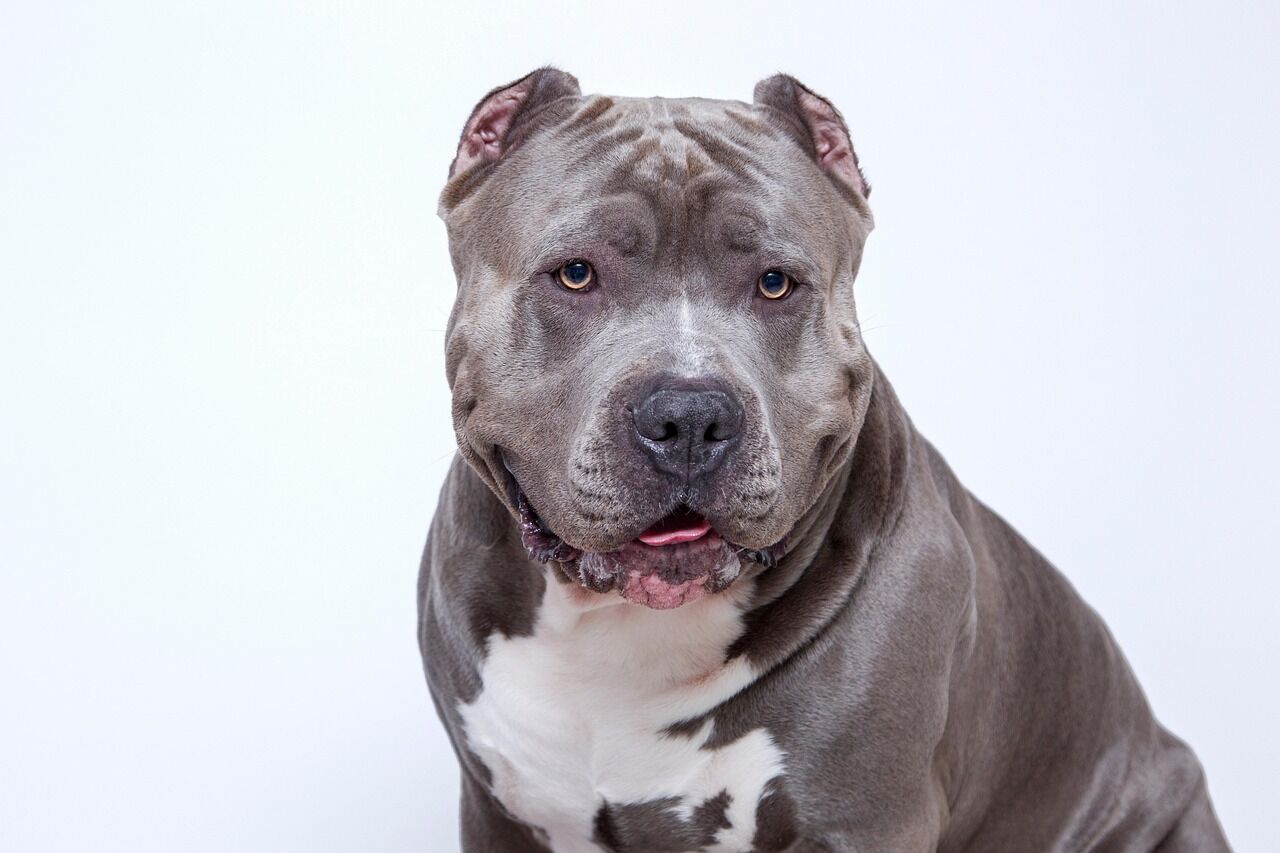
Muscular bodies + cropped ears (sometimes) + wide jaw = intimidating to people unfamiliar with the breed.
2. They're vocal
Pit Bull play often involves constant grunting, growling, and 'talking.' This sounds aggressive to anyone who hasn't seen it before.
3. Pop culture has been brutal
Decades of misrepresentation in news media create automatic fear responses in people who've never met a Pit Bull.
4. Their body language is different
Pit Bulls play with FULL commitment — they roll, slam, wrestle, body-block. A Lab plays with politeness. A Pit Bull plays with their entire being.
5. Other dog owners panic
Even when YOUR dog is fine, other people's reactions can escalate the situation. Many Pit Bull parents end up de-escalating humans, not dogs.
Pit Bull Play vs. Other Breeds
- Pit Bull: loud, full-body, wrestle-heavy, vocal, high commitment
- Lab / Golden: polite, reciprocal, soft mouths, retrieve-focused
- Border Collie: stalking + chasing, often misread as aggressive
- German Shepherd: structured wrestling, often paired with vocalization
- Husky: vocal 'talking' + chase, often sounds dramatic
- Frenchie / Bulldog: body-slamming + grunting, short bursts
- Terrier: quick + scrappy, sharp pivots, toy-obsessed
Best Park Strategies for Pit Bull Parents
1. Match the Crowd
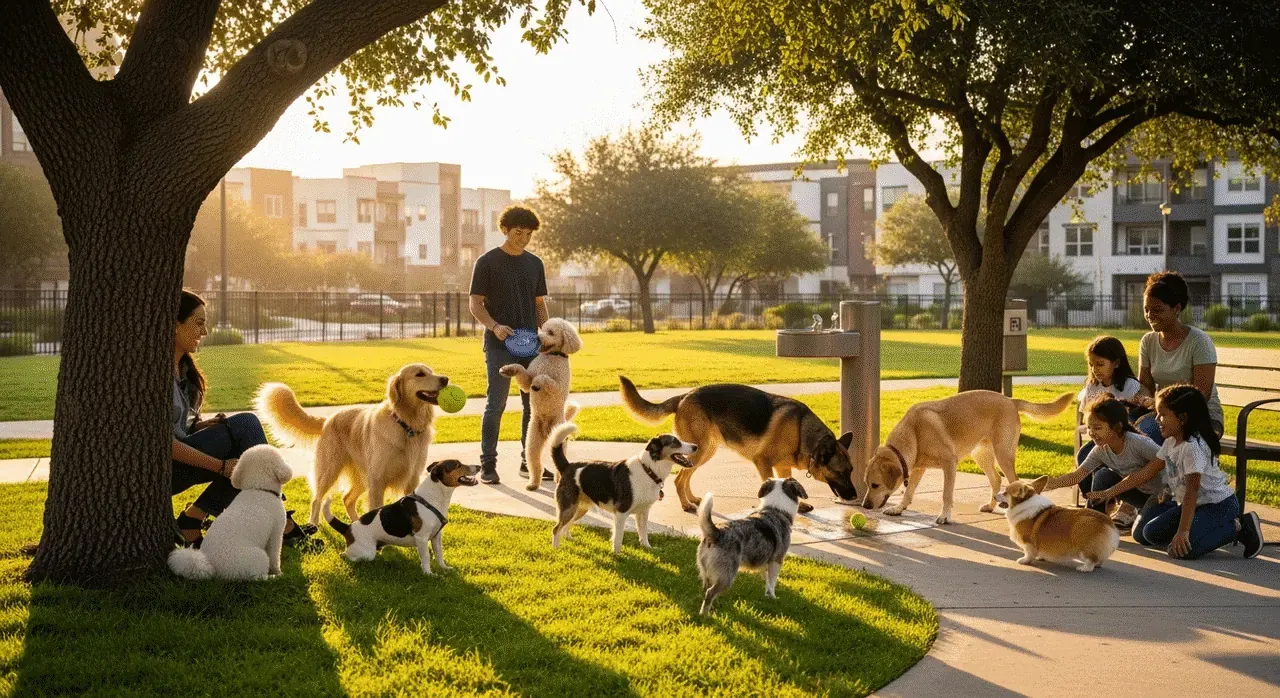
The dog park crowd matters more than the park itself. Look for engaged owners (not phone-scrollers), diverse breed mix (sign of an inclusive crowd), and other Pit Bulls or Pit Bull mixes (they often play together best).
Avoid parks dominated by only small breeds (size mismatch + nervous owners), one breed in high concentration (cliques), or nervous regulars who stand far from the action.
2. Own the Vibe
Walk in confident, calm, friendly. Pup parents read your energy first, your dog second.
3. Choose Compatible Playmates
Pit Bulls often play best with other Pit Bulls / bully breeds, Boxers, Labs (when energy matches), Goldens (when wrestlers), and other high-drive breeds.
Not always great with tiny dogs (size mismatch real), easily startled dogs (intensity overwhelms), or reactive / anxious dogs.
4. Have an Exit Plan
Bring a leash. Bring treats. Be ready to walk out smoothly if the energy shifts.
Why Some Pit Bull Owners Skip the Dog Park
It's a real choice many adopt: the breed-specific scrutiny is exhausting, one bad incident can sour the experience permanently, their dog often gets blamed first, public parks are unpredictable.
Better alternatives: private rental parks (total control, no judgment), matched playdates with known Pit Bull friends, structured group classes (training + social), and off-leash hikes with one or two trusted dogs. For many Pit Bull families, this combination is better than the public dog park forever.
What to Say When Strangers Misread Your Dog
Real lines that work:
- 'They're just being loud — Pit Bulls are vocal players.'
- 'Watch the body language — see the play bow? Totally normal.'
- 'Both dogs are taking turns. They're good.'
- 'My dog can stop on a dime — watch.' (Then call your dog. They come. Stranger relaxes.)
A trained Pit Bull who responds calmly to recall is the best ambassador the breed has.
FAQ
Why does my Pit Bull growl during play?
It's vocal play. Pit Bulls 'talk' through play — grunts, growls, woofs. It's not aggression unless paired with stiffness, hard stares, or escalation.
Are Pit Bulls more aggressive than other breeds?
No. Pit Bulls score similarly to Labs on standardized temperament tests. They play harder, but harder ≠ aggressive.
How can I tell if my Pit Bull is playing or fighting?
Look for play bows, role reversal, soft mouths, voluntary pauses, and loose body language. If those are present, even loud/intense play is healthy.
Can my Pit Bull play with small dogs?
Some can, some shouldn't. Size mismatch is a real risk — even friendly Pit Bulls can accidentally injure tiny dogs through play body-slams.
Find Pit-Bull-friendly meetups, parks, and playdates at Ruff Ruff Let's Play — your dog's tribe is out there.
Find a Dog Park Near You Now
Discover dog parks and connect with other dog parents. Public park pages show only the current checked-in dog count per park—not people or owner identities; two dogs from one person count as two. Individual check-in details are shared only with accepted connections when the person opts in.