Help Your Dog Lose Weight: A Walker's Plan That Actually Works (Vet-Backed)

The Blunt Truth
If your vet told you your dog needs to lose weight — they're right. Overweight dogs face shorter lifespans (1.5–2 years shorter on average), higher risk of diabetes, arthritis, heart disease, and cancer. And almost 60% of U.S. dogs are overweight or obese.
The good news: dogs lose weight faster than humans when the plan is right. The bad news: most weight loss plans fail because of one simple reason — dogs don't walk themselves.
Here's a walker's plan that actually works. Built with vet-informed best practices, and designed around the reality that you're busy.
Step 1: Get the Baseline (Visit Your Vet)
Before any weight loss plan, rule out medical causes:
- Thyroid issues (hypothyroidism causes weight gain)
- Cushing's disease
- Arthritis (limits exercise tolerance)
- Medication side effects
Once cleared, your vet will give you a target weight. Write it down.
Step 2: Know Your Dog's Daily Calorie Needs
Rough guidelines for weight loss (work with your vet for exact numbers):
- 10 lbs target weight → ~200–250 calories/day
- 25 lbs target → ~400–450 calories/day
- 50 lbs target → ~700–800 calories/day
- 75 lbs target → ~950–1,050 calories/day
- 100 lbs target → ~1,200–1,300 calories/day
For weight loss, reduce these by 15–20%. Your vet may recommend a weight-loss formula food.
Step 3: Fix the Food First
80% of weight loss is diet. No amount of walking fixes a free-feed overfed dog.
Practical fixes:
- Measure every meal — not eyeball it
- Use a measuring cup that matches the food's recommended serving size
- Switch to lower-calorie food if needed (Hills Metabolic, Purina OM, Royal Canin Satiety)
- Cut treats to 10% of daily calories max — use kibble as training treats
- No table scraps — zero exceptions
- Slow feeder bowls — extend meal time, reduce gulping
- Feed 2 smaller meals instead of 1 large
Step 4: Walk. Every. Single. Day.
This is where most plans die. Life gets busy. You're tired. It's raining. You'll "walk them twice tomorrow." You won't.
The minimum walk prescription for weight loss:
- Small dogs: 20–30 minutes per day
- Medium dogs: 30–45 minutes per day
- Large dogs: 45–60 minutes per day
- High-energy breeds: 60–90 minutes per day
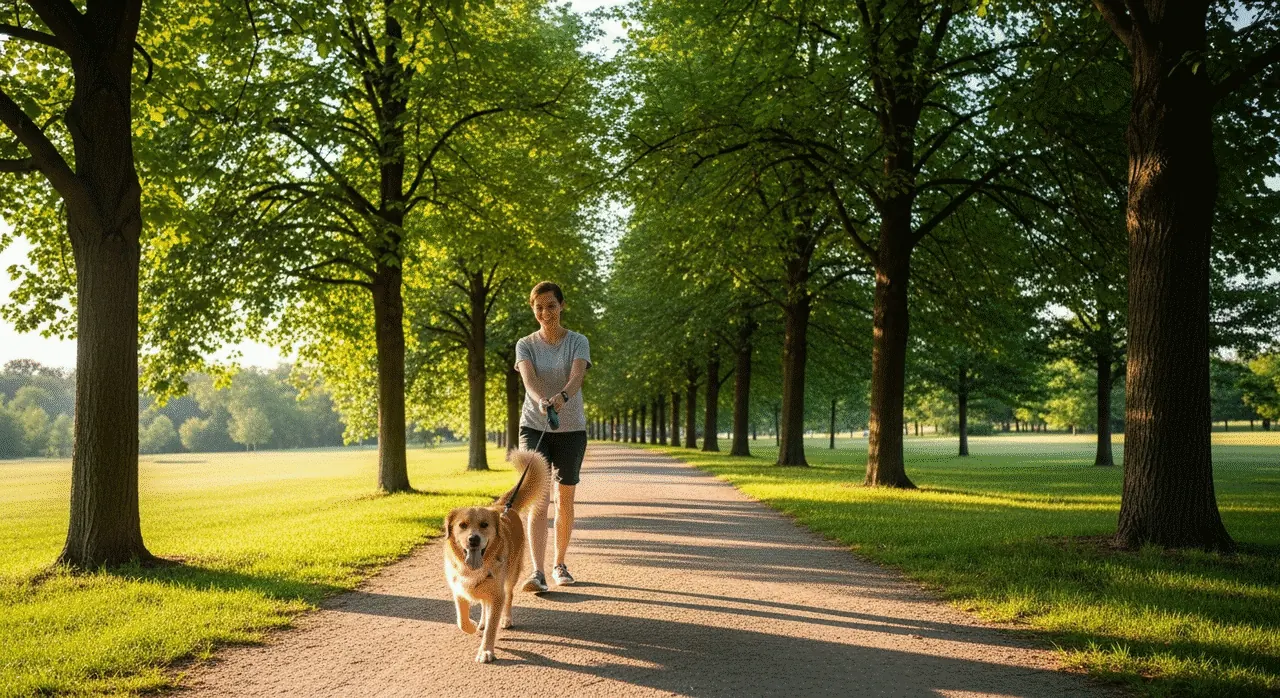
Walks should be at a brisk pace (enough that your dog is breathing but not gasping). Sniff-walks are great enrichment, but weight loss needs movement.
If you can't walk every day — outsource.
The single best ROI for a weight-loss plan: hire a daily dog walker.
Ruff Ruff Let's Play makes this easy:
- 30-min walks: $15–$25 each
- 4 walks/week: ~$80/month
- 7 walks/week: ~$140/month
Less than a personal trainer. Way more effective for your dog.
Step 5: Add Off-Leash or Play Sessions
Structured walks alone aren't enough. Add:
- Fetch sessions (10–15 min, 2–3x week)
- Dog park or playdate visits (1–2x week)
- Swimming if available — low-impact, huge calorie burn
- Agility training for dogs ready for it
Step 6: Track Progress
Weigh your dog monthly. Target: 1–2% body weight loss per week (slow and steady).
- 50 lb dog losing 10 lbs? Expect 10–20 weeks.
- 75 lb dog losing 15 lbs? Expect 15–30 weeks.
Any faster than that and you're risking muscle loss, nutritional deficiencies, or rebound.
A Sample Week (For a 60-lb Lab Needing to Lose 15 lbs)
Monday–Friday:
- 6:30 AM: 30-min morning walk (self or walker)
- 12:00 PM: 15-min midday walk (hired walker while at work) — this is the weight-loss multiplier
- 6:00 PM: 20-min evening walk
- Meals: measured, 2x daily
- Treats: limited to training kibble
Saturday:
- Morning: 45-min neighborhood walk
- Afternoon: dog park / playdate / swim (60 min active play)
Sunday:
- Morning: 30-min walk
- Afternoon: 30-min training session (engagement + enrichment + calorie burn)
Weekly total: ~5 hours of active movement
The Multiplier Move: A Midday Walker
Here's the single most impactful intervention for most overweight dogs: adding a midday walk 3–5 days per week.
- Doubles your dog's daily movement
- Breaks up long sedentary stretches
- Usually drops weight 2–3x faster than morning-only walks
- Costs $60–$100/week — often less than the vet bills saved
Book a recurring midday walker at ruffruffletsplay.com — it's the highest-leverage spend you'll make this year.
Common Weight Loss Mistakes
❌ "He's just big-boned"
Almost never true. Feel your dog's ribs. If you can't feel them easily, they're overweight.
❌ Skipping vet consultation
Calorie calculations vary by breed, age, and health. Get real numbers.
❌ Crash diets
Dogs losing weight too fast develop muscle loss and rebound weight gain.
❌ Rewarding diet success with food
Reward progress with walks, play, belly rubs. Never with extra food.
❌ Over-exercising on Day 1
If your dog is deconditioned, start with gentle walks. Build up gradually. Overdoing it leads to injury.
❌ One family member undermining the plan
If Grandpa slips the dog bacon every visit, the plan will fail. Everyone in the household has to be aligned.
For Senior Dogs
Special considerations:
- Shorter walks, more frequent
- Low-impact exercise (swimming > running)
- Watch for joint pain (arthritis, hip dysplasia)
- Senior weight-loss formulas
- Slower weight loss expected
- Patience — they can still lose weight; it just takes longer
FAQ
How long does it take for a dog to lose 10 lbs?
Typically 10–20 weeks with a consistent plan.
Is it okay to cut my dog's food in half?
No — that risks nutrient deficiency. Reduce by 15–20% OR switch to a weight-management formula.
Will exercise alone help my dog lose weight?
Not usually. Diet is 70–80% of weight loss. Exercise accelerates it and builds muscle.
How much walking is too much?
Dogs rarely over-exercise if built up gradually. Watch for limping, excessive panting, or refusal to walk.
What's the best single food for weight loss?
Prescription weight-management foods (Hill's, Royal Canin, Purina) are formulated for this. Your vet will recommend based on your dog.
Can my dog keep the weight off long-term?
Yes — but only if diet + exercise stay consistent after hitting target. Most rebound cases come from "we can relax now" thinking.
Does neutering affect weight?
Slightly. Neutered dogs often need 20–25% fewer calories to maintain weight.
Are human veggies a good weight loss food?
Many are great — carrots, green beans, plain cooked broccoli. Avoid onions, garlic, grapes, and avocados.
Your Dog Doesn't Have to Stay Overweight
Every extra pound your dog loses adds real years — and real quality — to their life. But the plan only works if the walks actually happen. And that's where hiring help flips the math.
Book a recurring dog walker at ruffruffletsplay.com — consistency is the whole game, and a local pro delivers it.
Related: Dog Gig Categories | Need Help With Your Dog
Find a Dog Park Near You Now
Discover dog parks and connect with other dog parents. Public park pages show only the current checked-in dog count per park—not people or owner identities; two dogs from one person count as two. Individual check-in details are shared only with accepted connections when the person opts in.
Keep Reading
Paws Down: The Off-Leash Dog Park App I Wish I'd Found Sooner (A Pup Parent's Tail of Trial and Error)
8 min read
Why I Stopped Trusting Yelp for Dog Parks (And the App I Actually Use Now)
8 min read
I Joined Every Dog Socializing Platform So You Don't Have To (Here's the One That's Actually Active)
9 min read